07 September 2023

'Mother Jones in Heaven' goes on the road again

US singer, songwriter, activist, and organiser Si Kahn announces in his latest e-newsletter that his one-woman musical play 'Mother Jones in Heaven' will be taking to the road next week, beginning in West Virginia, with Vivian Nesbitt in the title role and music by John Dillon on guitar. Full details, together with news of Si's other campaigns, are in the e-newsletter.

As the BIB noted on 24 July 2014, Mary Harris 'Mother' Jones (1837-1930), born in Cork city, emigrated to North America with her family as a teenager, married there, and (after major personal misfortunes) devoted herself to labour organisation and agitation, being very active in the Industrial Workers of the World, the United Mine Workers, and the Socialist Party of America. In 1902 an opposing lawyer labelled her 'the most dangerous woman in America'. Much of her work was done in the mining districts of Appalachia. She has been commemorated in many songs, including one by Andy Irvine.

© Richard Hawkins

Labels: , , ,

01 September 2023

Songs sung to Sharp - from Martin Simpson and Thomm Jutz

Thanks to John Lawless on Bluegrass Today for news of a project that should be a classic for anyone interested in the links between the folk music of these islands and Appalachia. Topic Records, the venerable UK folk music record company, will release four weeks from today (29 Sept.) the album Nothing but Green Willow: the songs of Mary Sands and Jane Gentry.

English folk singer Martin Simpson and German-born, Nashville-based singer/songwriter Thomm Jutz combine in their settings of some of the songs that Cecil Sharp and Maud Karpeles collected in the Appalachians in 1916-18, the first instalment being published as English folk songs from the Southern Appalachians (1917). A video of a song from the album, 'Edwin in the lowlands low', sung by Tim O'Brien, is on Bluegrass Today and on YouTube. The first single released by Topic, however, is of Cara Dillon singing 'Come all you fair and tender ladies', which can be heard on the Topic website and on YouTube. In another Topic video from YouTube, Simpson and Jutz talk about the origins of the project.

It should be recognised that Sharp and Karpeles went to Appalachia because Olive Dame Campbell, who had already been collecting songs there, was able to show Sharp evidence that the mountain people had the old songs that he was looking for. Her name is on the title page of the 1917 collection, as it includes songs she had collected. The BIB has published several posts concerning Cecil Sharp, which can be found by clicking on the label 'Cecil Sharp' at the foot of this post.

© Richard Hawkins

Labels: , , ,

17 August 2023

The Local Honeys back in Ireland in October

The Local Honeys (Linda Jean Stokley and Montana Hobbs) from east Kentucky, who made a big impact at the 13th Westport Folk and Bluegrass Festival (2019) and other appearances in Ireland, will be back in Ireland this autumn. At present their online tour schedule lists only a show in the Sound House, Dublin, at 7.30 p.m. on Thurs. 26 Oct., but the website of the Hawk's Well Theatre, Sligo town, shows them appearing there the following night (27 Oct.) with Niall McCabe. We await details of any other shows they may be playing in Ireland around those dates.

© Richard Hawkins

Labels: , , , ,

05 January 2023

The Local Honeys - coal and luthiery in Kentucky

The Local Honeys (Linda Jean Stokley and Montana Hobbs) from east Kentucky made a big impact at the 13th Westport Folk and Bluegrass Festival (2019) and other appearances in Ireland, so Jonny Therrien's recent Bluegrass Situation feature on them should be welcome to their fans here. It introduces their fifteen-minute video 'Dying to make a living', shot in a concert situation and posted on YouTube three months ago.

In the first five minutes the Honeys show how coal dominates the land and people of Appalachia, with the hardships that this continues to inflict. Doug Naselroad's Troublesome Creek Stringed Instrument Co. and its Appalachian School of Luthiery enable people to turn their lives around by producing fine acoustic guitars, mandolins, and dulcimers. The Company's website is well worth exploring throroughly, and it is also on Facebook. The video ends with the Honeys and their group performing the song that gives the video its name.
© Richard Hawkins

Labels: , , ,

16 December 2022

More detached notes

Hank Smith (right), who has many videos of banjo advice and instruction on the Deering Live channel, now opens a new series, 'Thinking pianistically'. The first instalment shows:

how to take chord inversions all the way up the neck of the banjo utilizing open strings to make your position shifts more fluid. This technique will give you freedom to move all over the fingerboard and you can use this in improvising, composing, and more.

Hank, who is co-leader with Pattie Hopkins of the progressive bluegrass band Hank, Pattie & the Current, plans to travel to Ireland at the end of this month with Billie Feather (the Current's guitarist, who is also an educator) as a duo, and to be in Dublin from 29 Dec. to 7 Jan. Hank is also a friend of Dublin's Paddy Kiernan.
*
John Lawless reports on Bluegrass Today that Boston's Mile Twelve (left) have released a video of the song 'Johnny Oklahoma', written by the band's guitarist Evan Murphy. It is the second single to be released from their forthcoming album Close enough to hear, and can be seen on Bluegrass Today and on YouTube.
*
The Fretboard Journal (FJ) reports on the success of its 2022 Chicago Fretboard Summit, and announces next year's event for 24-26 Aug. 2023; VIP three-day all-access passes are now on sale. Meanwhile, issue 51 of the FJ is being posted to subscribers; and, more to the point for bluegrass people, the FJ website carries a podcast interview with mandolinist Sierra Hull and a video (also on YouTube) of her playing the composition 'Over the mountain'.
*
The Compass Records Group announce the coming release of two albums by former visitors to Ireland: Living in a song by Rob Ickes and Trey Hensley (headliners at the 2016 Dunmore East bluegrass festival), due out on 10 Feb. 2023; and The lovin' of the game by Michael Cleveland & Flamekeeper (see the BIB for 10 Dec.), which is due out on 3 Mar. 2023. Both albums can be pre-ordered.
*
Kristy Cox, award-winning Australian singer who toured Ireland with her band in 2019 (thanks to mygrassisblue.com) and since moved to Nashville, TN, has a new single out on Billy Blue Records: a duet with Marty Raybon, 'Kentucky's never been this far from Tennessee'. It can be heard on Bluegrass Today.
*
Dolly Parton's Smoky Mountain Christmas Carol is playing at the Queen Elizabeth Hall, Southbank Centre, London SE1 8XX, from 8 Dec. to 8 Jan. Dickens's classic story is moved to a 1930s Appalachian coal-mining area. The Guardian's reviewer finds its treatment over-sweet, but ends: 'If you come for Parton’s songs, you will most likely enjoy this show and the live band, whose instruments include the banjo, mandolin [and fiddle, guitar, and bass] and at one point the spoons. If only there were more music, less book.' Tickets can be booked here.

© Richard Hawkins

Labels: , , , , , , ,

14 October 2022

Jake Xerxes Fussell (USA) back in Dublin, 26 Oct. 2022

Whelan's Live of Dublin 2 announce that Jake Xerxes Fussell (right) of North Carolina, who in spring this year played at the Kilkenny Roots Festival and several other gigs, will be playing on their main stage on Wed. 26 Oct. from 8.00 to 10.45 p.m. Tickets are €21.50 (a 50c per ticket service charge applies on all bookings through Whelan's). This is the final show in a European tour now in progress, with six shows still to come in Britain, two in the Netherlands, one in Germany, and two in Denmark.

© Richard Hawkins

Labels: , , ,

17 August 2022

Supporting flooded Appalachia

The BIB mentioned three weeks ago the floods that were then devastating Appalachia, coming on top of the tornado damage of March in western Kentucky. The website of WoodSongs Old Time Radio Hour (organised by folksinger Michael Johnathon) reports that in response to the tornados 'WoodSongs, along with our friends, fellow musicians, companies like Martin Guitars, D’Addario, Highbridge Spring Water and music stores across the nation collected and distributed nearly 1,000 music instruments to the communities damaged', and a similar response to the floods is in progress. More detail is on the WoodSongs press release.

A photo on the Woodsongs website shows the office building of the Appalshop organisation standing in flood water about as high as the door lintels. Appalshop have set up a Flood Support Resources page with links to reports, public bodies and aid organisations. The Bitter Southerner (BS) online magazine has produced a new T-shirt with 'HELL AND HIGH WATER' on the front, and the BS is donating $5 to Appalshop from the sale of each shirt, 'to help fund the difficult process ahead as they salvage priceless Appalachian history and culture'.

Finally, as an example of a response by one music company among many, the Sound Biscuit Studio has a 'Help support Kentucky' page on its website, and is donating to eastern Kentucky disaster relief all the proceeds from the sales on 5 August of God's love is so divine: remastered, the gospel album by the Po' Ramblin' Boys. The official release of the album will be on 22 September, at a festival where other bands will include the fine traditional Ozark band Frank Ray & Cedar Hill.

© Richard Hawkins

Labels: , , , ,

29 July 2022

Appalachia in the news and on screen

At the time of writing this post, the southern Appalachian mountain area - especially eastern Kentucky, eastern West Virginia, and south-western Virginia - is being devastated by flooding that is taking lives and destroying homes. All who feel for the music and the general culture of Appalachia should feel also for its people who are enduring these latest trials, burdens, and dangers.

Coincidentally, the Birthplace of Country Music Museum in Bristol, TN, screened yesterday the 2019 film Hillbilly, produced and directed by Sally Rubin and Ashley York. An investigative documentary, it examines how the stigmas attached to the negative 'hillbilly' stereotypes developed, and how these are linked to the exploitation of the region. A brief trailer is on YouTube, and predominantly favourable reviews are given on the Rotten Tomatoes website.

© Richard Hawkins

Labels: ,

20 January 2022

John Rice Irwin, 1930-2022

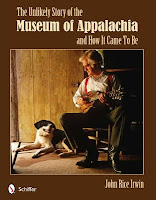
The BIB learns with regret of the death last Sunday (16 Jan.) of John Rice irwin, who founded the Museum of Appalachia in Norris, TN, to commemorate the lifestyles of the people of the region. An obituary by Richard Thompson on Bluegrass Today includes a bibliography of his writings; the picture of him on the right is from the cover of his book The unlikely story of the Museum of Appalachia and how it came to be (2012). A compilation of forty photographs of him through the years can be seen on Facebook. His funeral takes place today (20 Jan.), and a celebration of his life will be held at the Museum in April.

The Museum of Appalachia presented from 1980 to 2017 the Tennessee Fall Homecoming, a festival of the music, crafts, and culture of Appalachia at which many bluegrass, old-time, and other musicians performed every year.

© Richard Hawkins

Labels: , , , , ,

30 December 2021

You gave me a song now on video stream

The production team of You gave me a song, the documentary film of the remarkable life of Alice Gerrard (centre in photo), are happy to announce that it can now be watched on video stream, and can be rented or bought here. Some box sets and other merchandise are still available through the film's website. Part of the proceeds from sales goes to benefit the Highlander Research and Education Center. More details are on Facebook.

© Richard Hawkins

Labels: , , , ,

17 December 2021

Appalshop endorses the Westport Folk and Bluegrass Festival

Thanks to Uri Kohen, head of the organising team of the Westport Folk and Bluegrass Festival in Co. Mayo, for this news:

Westport Folk and Bluegrass Festival are delighted and honoured to be endorsed by Appalshop.

The Appalshop organisation and community have been working for the past fifty years to preserve and promote the culture and lifestyle of the Appalachia region and its people.

The Festival recognises the importance of understanding the region and endeavours to promote its cultural values by inviting artists from the region to participate in the festival.

This endorsement is a massive stamp of approval by a major organisation for the work we have been doing in Westport over the years, and for the projects we will continue to produce in the future.

BIB editor's note: On 13 Dec. the European Bluegrass Music Association Facebook carried the 'accommodation in Westport' advice from the Westport Folk and Bluegrass Festival website.

© Richard Hawkins

Labels: , ,

02 November 2021

National Native American Heritage Month

The commemorative period now known as National Native American Heritage Month began yesterday (1 Nov.) in the USA. The BIB combines marking the occasion with remembering Raymond Fairchild (left) of Cherokee, NC, who died two years ago (see Bluegrass Today for 14 Oct. 2019, the BIB post of the following day, and Banjo News Letter). A phenomenal banjo-player, he was also proud of his Cherokee ancestry.

The account the BIB gave in 2019 can be amended by watching the first two-and-a-half minutes of Alan Lomax's 1991 film 'Appalachian journey' on YouTube. At 1:55 Lomax asks Raymond 'Are you proud of your Indian blood?'; he replies 'Yes sir. Definitely', and shortly afterwards is shown saying 'I'm proud to be a mountain man; and I'm proud to be a banjo-picker. I don't care what you say about it!'

© Richard Hawkins

Labels: , , ,

08 June 2021

Change and tradition in Appalachia

The Bitter Southerner online magazine publishes today 'The Mountain Traditions Project', a report by Michael O. Snyder on the project he is conducting to document the experiences of the diversity of people who live in Appalachia and their varied responses to change. So far, nearly sixty individuals have been consulted; extracts from the stories of thirty or so of them (all with photographs) are in the article, and more can be heard on the project's podcast.

The informants, who come from many aspects of life in Appalachia, include Amy Lough, ballad singer and dulcimer player; the Mountain Anthems, a shape-note-singing congregation; Slim Harrison, dance caller; and the Rev. Frankie Revell, banjo-player, who says:

... everything good that's ever happened in my life has happened as a result of the banjo. I think it's just a part of my calling; I'm going to preach, and I'm going to pick.

He also says, however, 'I don't know why we closely guard these traditions. For me, it's another thing that hurts us.' The photo of his instrument collection is well worth seeing in itself.

Update 7 Sept.: The Bitter Southerner has reissued this article, without Frankie Revell's last quoted words, whioh may have seemed out of harmony with the purpose of the Mountain Traditions Project.

© Richard Hawkins

Labels: , , , ,

23 March 2021

New podcast series on black Appalachian music

The subject of black music in Appalachia is deservedly receiving greater attention, and the Great Smoky Mountains Association has accordingly launched a new mini-series, 'Sepia tones: exploring black Appalachian music' on its 'Smoky Mountain Air' podcast channel. To be broadcast every other month, the six episodes are hosted by two distinguished scholars, Dr William Turner and Dr Ted Olson.

The image shown above comes from the Association's Facebook, where there is a basic introduction and a link to the fuller details on the Association's website. See also John Lawless's feature on Bluegrass Today. The first episode can be heard here. The 33 minutes include five musical examples; one contributor is the English folksinger Martin Simpson, performing 'John Hardy' with Dom Flemons.

Listeners can expect to learn a lot, and not just about Appalachian music. It was revealed that though 1619 is widely regarded as the earliest date at which African slaves came to North America, Spanish explorers and their Moroccan slaves were in the Smokies "at least one hundred and fifty years before then" - that is, in 1469 or earlier. Which raises the interesting point: did anyone think of telling Columbus before he set out?

© Richard Hawkins

Labels: , , ,

14 December 2020

You gave me a song box sets now available

The organising team of You gave me a song, the documentary film about the life and music of Alice Gerrard, announce with pride that the You gave me a song box set is now available:

Box Set featuring the 77-minute Film Festival cut, bonus scenes, and outtakes, 2 CDs with music from the film and Alice’s discography and personal archive, and an 8 page booklet with favorite photos and a note from Alice.

A portion of sales will support cultural organizing projects of the Highlander Research and Education Center, a catalyst for grassroots organizing and movement building in Appalachia and the South for ninety years.


Six limited-edition bundles, each comprising the box set with a variety of additional goodies, have also been prepared; two of these have already sold out. Details of the bundles and of pricing and postage are on the website, where sets can be bought.

Labels: , , , ,

10 November 2020

A not-really-necessary defence of Bluegrass: a history (and more)

The BIB editor writes:

The BIB post of 14/18 Aug. was mainly concerned with 'Making black influence in bluegrass visible', a student post by Teiana Nakano in Feb. 2018 on the blog 'Music 345: race, identity, and representation in American music'. Nakano's first paragraph (with links added by the BIB) reads:

Neil Rosenberg’s book Bluegrass: a history presents a greatly different idea of bluegrass history when being compared to Rhiannon Giddens’ keynote speech at the International Bluegrass Music Association Business Conference. I took particular interest to Giddens’ point that scholars and historians, which surely includes Rosenberg, have contributed the erasure of black history in bluegrass.

In fact, Rhiannon Giddens’s 2017 IBMA keynote address doesn't make this point. The scholars and historians she names are Dena J. Epstein, Phil Jamison, and Patrick Huber, all of whom strongly emphasise the importance of black traditions and performers in American folk and old-time music and dance. The people she blames are (a) Ralph Peer and others who created a segregated music marketing industry, fostering a myth that those who made and those who bought 'mountain music' were all white; and (b) folklorists and song collectors who colluded in creating this myth, among whom she focuses on Cecil Sharp. Readers of the BIB for 5 Oct. won't be surprised that I don't agree with her on this (see below).

Bluegrass: a history and the 2017 IBMA keynote address 'present different pictures' because they're about different things. Giddens asks 'Why is bluegrass so white?', and the answer (as she shows) is the artificial barriers that were erected before bluegrass developed. Her valid and important message - that it's time to remove barriers - takes nothing away from the value of Bluegrass: a history. Neil Rosenberg produced a comprehensive account, meticulously detailed and admirably organised and analysed, of the music that took its classic form in 1945, gained a name a decade later, and subsequently evolved. Those who wish the book had paid more attention to black music before 1945 should note that it does not pretend to be a history of white music before 1945 either.

********
Warning: Readers who have seen quite enough about Cecil Sharp on this blog should stop reading now.

The paragraph on Sharp from the 2017 keynote address is as follows, in italics. My comments are in roman.

Folklorists and song collectors at the time also had a huge hand in the creation of this myth; Cecil Sharp, founder of the English Folk Dance and Song Society, was one of the first to brave the Appalachian mountains in search of it.
Of the myth? No; some people have written of Sharp as if he were looking for Elizabethan settlers or a 'pure Anglo-Saxon race', but he was in search of songs that had originated in Britain and Ireland, because that was the focus of his life. He had devoted himself to English folk song and dance for fifteen years, and he had been given solid evidence that many such ballads and songs were still being sung in Appalachia. Not surprisingly, he wanted to find them.

With Maud Karpeles he spent three years in the Appalachian mountains,
Nearly a year, all told: two months in 1916, about four-and-a-half in 1917, and a similar total in 1918.

... recording families and making much of what he found there – but only the white folks.
And not even all of them - not the Dutch or Germans, for instance, who were surely white enough...

Now by the time they got to western North Carolina, the black population wasn’t as high as it was, but that’s only part of the reason there’s no black representation in his collections, which influenced everyone who came after; they just plain didn’t like black people.
Regrettably, there is truth in this, but not the whole truth. Sharp, from long experience with country people in England, found the white mountain people familiar, accessible, and congenial, as well as being richer in the music he was seeking than he could ever have expected. By contrast, he had no experience to put him on an easy footing with African-Americans or encourage him to approach them, as he did not expect them to have songs with origins in these islands. When he met an individual black person who did - such as Aunt Maria Tomes, who sang 'Barbara Allen' for him - they seem to have got on well together; but Sharp and Karpeles certainly expressed feelings (to use the words of Kehrberg and Keith) of 'disdain and dismissal' about black people in general.

This abounds in their writings – my favorite quote is this one; after a long hard hike looking for the most isolated homesteads to record, they caught sight of some likely looking log cabins. Sharp says [in his private diary]: 'We tramped – a very hard and warm walk, mainly uphill. When we reached the cove we found it peopled entirely by negroes!! All our trouble and spent energy for naught.' Except of course, he didn’t say negroes.
It wouldn't have helped if he had, by some present-day standards. The dismay of Sharp and Karpeles at this place was clearly (as Phil Jamison recognises) because they believed no suitable songs would be found among black people; this was before they had met Mrs Sinda Walker or Aunt Maria Tomes. However, a year later Sharp's intense dislike of Winston-Salem, NC, was partly due to its black population. Mike Yates, in his major account of Sharp in Appalachia, considers the way Sharp writes in his diary about them 'indefensible', though possibly exacerbated by the effects of ill-health.

Two things more about Sharp and race: first, after his initial visit to Appalachia his view was that the mountain people had 'so many of the essentials of culture' chiefly because 'they have one and all entered at birth into the full enjoyment of their racial heritage' (English folk songs (1917), introduction, p. ix). Developing that further (ibid., pp xix-xx) - and using 'racial' and 'national' interchangeably - he suggested 'with the greatest diffidence' that city education authorities in the USA tended

to ignore the educational and cultural value of that national heritage which every immigrant brings with him [...].  I admit that the problem which faces the educationist in America is a peculiarly difficult one, but it will, I am convinced, never be satisfactorily solved until the education given to every foreign colonist is directly based upon, and closely related to, his or her national inheritance of culture [bold type added by the BIB].

In theory, at least, Sharp was consequently arguing against 'Anglo' supremacy in education.

Secondly, by the time he finally left Appalachia, his own brief experience there had indicated, and his communications with John C. Campbell would have confirmed, that there were no simple answers to the question of ethnic origins of its population. What he felt entitled to observe was that 'whatever admixture of races there may be in the mountains', the predominant culture there (judging by traditional songs and dances) was 'Anglo-Celtic' - a term that Campbell hoped might reconcile the proponents of 'Scotch-Irish' and 'English' origin.
*
John C. Campbell, The southern highlander and his homeland. Russell Sage Foundation, New York, 1921. Chapter IV, 'Ancestry', pp 50-71 (see Sharp's contribution, pp 69-71).

English folk songs from the southern Appalachians (1917 ed.), introduction by Sharp, pp ix, xix-xx.

© Richard Hawkins

Labels: , , , ,

05 November 2020

Richard Blaustein and The thistle and the brier

The BIB learns with regret of the death of Richard Blaustein, professor emeritus of East Tennessee State University (ETSU), scholar, old-time fiddler and banjo player, and director of ETSU's Center for Appalachian Studies and Services. An obituary by Jack Tottle is on Bluegrass Today, which includes an audio recording of Dr Blaustein (with friends) singing the old-timey song 'Boozy Creek'.

His prolific scholarly output includes a book specially likely to interest readers this side of the Atlantic: The thistle and the brier: historical links and cultural parallels between Scotland and Appalachia, published by McFarland Press at $29.95. A preview can be seen here

Labels: , ,

16 October 2020

The Mountain Minor October news

Following upon our post of 30 Sept., Dale Farmer, head of The Mountain Minor team, announces that due to Covid delays with the distributor, the hard-copy soundtrack CD is only available at present by ordering from the film's web page, but it should be available on Amazon and most major online catalogues in a couple of weeks. Digital copies can be ordered through iTunes, Amazon, and Spotify.

The CD release celebration will be held at the Kentucky Music Hall of Fame on 6 Nov. (see poster image above) and will be open to the public with COVID safety measures, plus live music from some of the cast. The e-newsletter presents a video (also on YouTube) of Dan Gellert (fiddle) and Ma Crow (guitar) playing 'Cripple Creek' right through, as distinct from the clips heard in the film; don't miss it. Finally, Dale thanks reviewers, who overall have been 'overwhelmingly positive'.

Labels: , , , ,

05 October 2020

A crossroads? Part 3: A brief defence of Cecil Sharp

The BIB editor writes:

I had intended part 3 of this series to focus on one of the sources listed by Tatiana Hargreaves in Old Time News - the online article by Kevin Kehrberg and Jeffrey A. Keith, ‘Somebody died, babe: a musical cover-up of racism, violence, & greed’. It's a compelling account of the circumstances in which one song, 'Swannanoa tunnel', was created in Appalachia and has subsequently been presented; it raises questions about the picture, put forward by Rhiannon Giddens, of a repertoire 'shared' among black and white Southerners; and it makes a statement about the respect due to music and its makers, with which I fully agree. Unfortunately, Hargreaves has chosen to highlight one of the most misleading passages in the whole piece:

Sharp claimed 'Swannanoa Town' (explicitly), 'Swannanoa Tunnel' (by extension), and 'John Henry' (for good measure) as English in origin. Such distorted conclusions resulted from Sharp's understanding of folk music that placed Europe in general and England in particular at its center. This warped logic led Sharp to claim English ownership of music that was 200 years and 5,000 miles removed from his homeland. Travel diaries from his Appalachian collecting trips also reveal a categorical disdain and dismissal of Black people. Had he known the true source of 'Swannanoa Town', he may [sic] not have even bothered to preserve it. Despite such views, the influence of Sharp's work lingers on today in common cultural perceptions of American folk music.

'Sharp' is Cecil James Sharp (1859-1924), founder of the folk music and dance revival movement in England, whose song-collecting in Appalachia with Maud Karpeles during eleven or twelve months in 1916-18 produced a body of over 1,600 tunes. Over the years he and his work have been criticised from one angle or another. In recent years his work in Appalachia has come under attack from the USA, with the most detailed and careful attack, backed by expert knowledge in the field of dance, coming from Phil Jamison; other American critics seem to suffer from prejudice, an inflamed imagination, or a general lack of grip. In the paragraph quoted above, for instance, the last sentence and (with strong reservations) the sentence about 'disdain and dismissal' are all that hold water. Kehrberg and Keith do themselves no favours by writing about the version of 'Swannanoa Tunnel' which Sharp transcribed from the singing of Mrs Sarah Buckner and Mrs Ford in September 1916, as if he had personally changed the words and altered the time signature of the tune from the original work song.

An adequate answer to all Sharp's critics would take far more space than the BIB can spare. What seems to be at the core of American objections to him, though, is the charge of 'anglocentricity': someone who was not blinkered by nationalistic anglocentricity, they imply, would have gone through Appalachia attempting, at least, to do justice to all its rich musical traditions. Those who take this line might consider the following:
  • He was an Englishman, normally resident in England.
  • He had, through over ten years of full-time collecting, teaching, and writing in England, earned a reputation as an expert on English folk song and dance.
  • Having earned this reputation, he was able to lecture and give instruction in English folk song and dance in cities of the USA in 1914 and 1915.
  • Because of this reputation, Olive Dame Campbell showed him in 1915 songs she had collected in Appalachia, which he could see at a glance were 'apparently of Irish, Scottish or English origin'. She suggested that he should come to Appalachia on the chance of finding more; and because he was interested in such material, he went.
  • On arriving in Appalachia, he and Maud Karpeles found there was more of it than they could ever have expected.
Sharp had limited time and resources; he was in his mid-fifties; and he was not in the best of health for travel in the mountains. To me, it's not in the least surprising that he should have given first priority to places and people that had the music he was primarily interested in. He wasn't there to make a general survey of Appalachian music; and I consider it stands to his credit that he gave as much attention as he did to music that originated in America.

As a final tit-bit, here's an account he wrote of hearing the nephews of a Mrs Crawford, of Balsam, NC, play a fiddle-and-banjo duet in July 1917:

The thing was very skilfully played, plumb in tune, and its constant repetition had a very hypnotic effect on me and apparently on the players... the tunes look little enough when committed to paper, but the way they were played produced a very curious and not un-beautiful effect.

That should strike a chord with old-time enthusiasts.

********
Phil Jamison, Hoedowns, reels, and frolics: roots and branches of southern Appalachian dance. University of Illinois Press, 2015. (Music in American Life)
Mike Yates, 'Cecil Sharp in America: collecting in the Appalachians' at http://www.mustrad.org.uk/articles/sharp.htm. 1999.

© Richard Hawkins

Labels: , , , ,

04 September 2020

Online tuition and much more from Ken Perlman

Ken Perlman (below; USA), master of 'melodic clawhammer' and fingerstyle guitar, sends his latest newsletter; the headlines are as follows:
* Ken to offer online banjo 'clinics' *
* American Banjo Camp sponsors all-star concert online on Sunday evening, 12 Sept. *
* Ken's new book Appalachian fiddle tunes for clawhammer banjo recently published *
* Study clawhammer with Ken privately via Skype or Zoom *

More details on all these and on Ken's other publications, recordings, folklore work, and instruction are on his website. See also Pat Kelleher's review of Ken's new book on the BIB for 29 June.

Labels: , , , , , , ,